

ANATOLY KOLODKIN


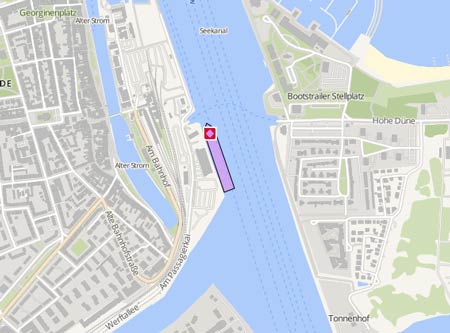
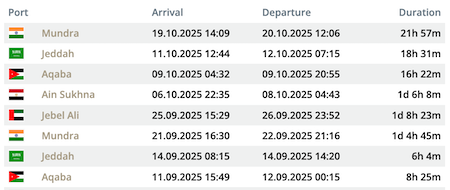
Die letzten Häfen
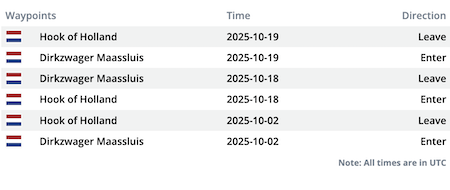
Die letzten Wegpunkte
Die neuesten Nachrichten
Tanker docked in Matanzas
The US government let the 'Anatoly Kolodkin' dock in Cuba, alleviating an energy crisis triggered when the US prohibited deliveries to the country. On Mrch 30 the vessel entered Cuban. Waters. The 'Anatoly Kolodkin' was carrying around 730,000 barrels of crude. Cuban officials have taken some steps to work with the US in recent days, including allowing fuel for the US Embassy to arrive on the island after earlier saying publicly that they would prevent it because of the broader US near-total blockade, according to the people. On the afternoon of March 29, the ship had approached the island from Haitian waters as it headed towards the port of Matanzas. The fuel shipment should be enough to power Cuba’s thermoelectric power plants for about a week, given they required about 100,000 barrels of oil a day to meet demand. Cuba’s domestic production accounts for only around two-fifths of that. On March 31 unloading of thd cargo commenced. It will take between 25 and 35 days before the oil can be fully processed and distributed domestically. Report with photo: https://gcaptain.com/russian-oil-tanker-begins-discharging-cargo-in-cubas-matanzas-terminal/
Shadow tanker transiting Caribbean Sea
The sanctioned 'Anatoly Kolodkin' was transiting the Caribbean Sea with a cargo of approximately 730,000 barrels of unrefined crude oil. After crossing the Atlantic at an average speed of 11 knots, the tanker has updated its AIS vector, indicating a direct heading toward Cuba. On March 26, it was five sailing days away. The last tanker to dock in Cuba with crude oil from abroad was the 'Ocean Mariner' on Jan 9, carrying cargo from Mexico. As the shipment was oil, whileCuba needs is diesel, the cargo (and the ship's size suggested that the 'Anatoly Kolodkin' could head either to the oil logistics hub of Matanzas (northwest) or to Cienfuegos (south-central), a bay with a major refinery. The transit through the English Channel and the Ouessant Strait around March 16 had been conducted under the escort of the Russian Navy Steregushchiy-class corvette 'Soobrazitelniy', suggesting a strategic priority for the shipment. A U.S. Navy Destroyer has been positioned in the waters north of Cuba. Analysts expected the tanker to disable its AIS, once it approaches the Cuban coast to obscure the exact point of discharge. The shipment appeared to be a critical energy supply mission to mitigate the current fuel deficit in Cuba. While the Hong Kong-flagged tanker 'Sea Horse', transporting a cargo of diesel fuel, was diverted to Trinidad due to mechanical failure, the 'Anatoly Kolodkin' remains the primary Russian energy vector active in the region.
Tanker tracket on its way into the Atlantic
The UK Royal Navy was tracking the Sovcomflot tanker 'Anatoly Kolodkin', loaded with 730,000 barrels of Russian crude at Primorsky at the beginning of the month, on March 19 and dispatched the Portsmouth-based HMS 'Mersey' along with a Wildcat helicopter to track the tanker’s transit through the English Channel. The warship completed a 48-hour monitoring effort as the tanker left the Channel and headed into the Atlantic. The tanker was accompanied through the Channel by the Russian Steregushchiy-class frigate RFN 'Soobrazitelny'. The frigate, however, turned back eastwards, since. The 'Anatoly Kolodkin' was under U.S., UK, and EU sanctions. It was believe the ship was heading for Matanzas. The Commander of theSouthern Command, Marine General Francis Donovan, confirmed on March 19 that the U.S. was also tracking the tanker.
News schreiben