

CCG S. DUDKA


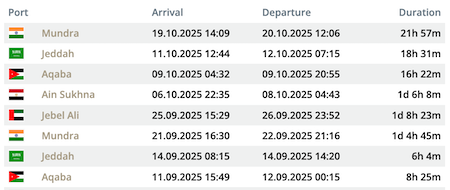
Die letzten Häfen
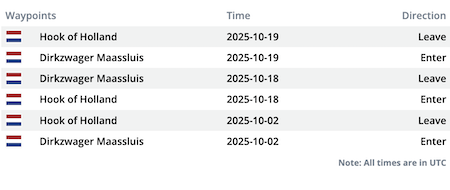
Die letzten Wegpunkte
Die neuesten Nachrichten
Coast Guard captain fired for willfully ignoring distress call
The Canadian Coast Guard fired Lou Callaghan, 73, the former commander of the 'S. Dudka', for willfully ignoring a distress call from the distressed f/v 'Knot a Chance', with five people on board, on May 13, 2024, according to a recently published decision from the Federal Public Sector Labour Relations and Employment Board. The mussel boat had run aground on a sandbar in the Malpeque Harbour channel and started taking on water in rough seas. Another vessel tried to help and sent a mayday call. The 'S. Dudka' was approximately 6.3 nautical miles north by northwest of the entrance to the harbour when the first mayday call was issued, but chugged along past the location for about 13 to 17 minutes. In the meantime, the fishermen were facing a scary situation with the tide coming in and waves crashing into the mussel boat. The crew took refuge by climbing onto the roof of the boat. Callaghan argued he committed no wrongdoing because he believed Coastguard vessels should wait to be tasked before responding to a distress call. Christopher Rootham, the adjudicator in the case, stated that he was wrong; as all captains have a legal duty to respond to a distress call on receiving that call. According to the timeline of events laid out in the decision, there were two mayday calls sent out: one from a fishing boat on behalf of the 'Knot a Chance' at around 8:26 a.m. and one seven minutes later: a mayday relay call from the Marine Communications and Traffic Services Centre (MCTS). During the hearing, the three other crew members testified they heard the first call but Callaghan denied that he did. One of the deckhands also testified that Callaghan either turned off the radio or turned down its volume so he would not have to listen to the calls. Asked during cross-examination, the former captain offered three different answers. "Regardless of which of Mr. Callaghan's answers I believe, he did something to reduce the volume of the mayday call in the middle of a mayday situation. The second mayday call, at 8:33 a.m., relayed the coordinates of the 'Knot a Chance'. Callaghan called marine communications at around 8:43 a.m. to ask whether everything was under control and was told "if you're able to assist that would be great." Between 8:51 a.m. and 8:55 a.m. the ship changed course and headed toward the mussel boat. Then it stopped, waited over five minutes to be told to help a second time, turned around and proceeded to Malpeque Harbour. During the hearing Callaghan testified that there was not very much that his ship could have done. Callaghan argued he had an inexperienced crew, a faulty radio and that the 'S. Dudka' also risked running aground in the channel. The Coastguard successfully fought the grievance asking Rootham to consider three factors: the risk of future lives at stake, the reputation of the Canadian Coast Guard and the general trust of the public. "The captain of a ship in Canadian waters is under a legal duty to respond to distress calls under Section 131 of the Canada Shipping Act, which applies the related rule in the International Convention for the Safety of Life at Sea." The decision reinforces the high standard of professionalism it demands from its personnel and stressed the requirement to render assistance to those in distress "is the cornerstone of our mandate. Callaghan planned to appeal. Report with photos: https://www.cbc.ca/news/politics/canadian-coast-guard-captain-fired-9.7117840
Coast Guard boat had bottom touch
The CCG 'S. Dudka', with three crew members on board, suffered a bottom touch in pos. 46 45 00 N, 064 02 00 W in the Cascumpec Bay, Prince Edward Island, on July 330, 2023, at 1.45 p.m. ADT. The vessel refloated unassisted and proceeded on its way.
News schreiben