

HMM NAMU


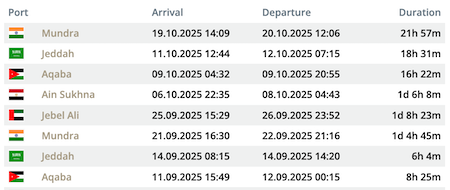
Die letzten Häfen
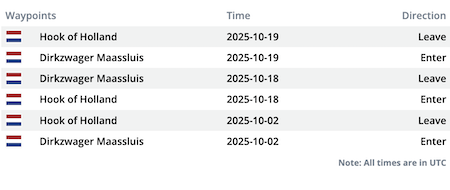
Die letzten Wegpunkte
Die neuesten Nachrichten
Repairs to be completed in mid-July
The 'HMM Namu' has been set to leave the Strait of Hormuz by mid-July following repairs of the damage sustained in the attack in May. The South Korean government had initially pointed to an Iranian anti-ship missile as the likely cause for the damage, although responsibility for the incident was still to be officially determined. Seoul had stated on May 27, that an Iranian anti-ship missile was the probable cause, leading to the summoning of Iran's ambassador to share investigation findings and lodge a formal protest. However, Saeed Koozechi, Iran's ambassador to South Korea, denied Tehran's involvement. South Korea subsequently acknowledged it could not conclusively determine responsibility or the intentional nature of the attack.
Korean president said that Iran likely did not intentionally target ship
The Korean President Lee Jae Myung said on June 8, that Iran likely did not intentionally target the South Korean-operated 'HMM Namu' in the Persian Gulf. He emphasised that Seoul had protested what it sees as a violation of its sovereignty and demanded measures to prevent a recurrence during a press conference marking the first anniversary of his inauguration at Cheong Wa Dae, Lee was asked about the government's assessment of the conflict in the Middle East and the recent attack on the vessel. Lee noted that South Korea's investigation had concluded "that our ship was struck by what is believed to be an Iranian-made airborne object, presumed to be a missile," but that Tehran has denied responsibility. "If it had been an intentional attack, they would likely have declared that they carried it out." The authorities were still examining whether the strike was deliberate, whether the vessel had been specifically targeted, or whether it was an accidental incident. Seoul had lodged a strong protest with Tehran and demanded steps to prevent similar incidents from happening again. According to the Foreign Ministry, forensic analysis of debris recovered from the vessel found similarities in the warhead's shape and components to those used in Iran's Noor and Qader anti-ship missile systems.Multiple pieces of evidence pointed toward Iran. One unexploded warhead was later recovered and transported to South Korea for detailed analysis.
Iranian ambassador rejected accusations regarding attack
Following allegations raised by South Korean officials regarding Iran’s alleged role in the attack on the 'HMM Namu', Saeed Kouzechi, the Iranian ambassador to Seoul, on May 27 rejected the accusations, stressing that Tehran had no involvement whatsoever in the event in a meeting with the First Vice Foreign Minister of South Korea. Tehran did not accept the findings of the South Korean investigation and dismissed the idea, warning about a possible “false flag operations” carried out by hostile actors. The Iranian ambassador also referred to the security situation in the region and the Strait of Hormuz, describing some recent incidents as resembling “maritime piracy.” He claimed that the current tensions were the result of the policies and actions of the United States and Israel. He additionally emphasised the importance of maritime security in the Strait of Hormuz, stating that Iran has consistently supported the safe passage of vessels through the strategic waterway. The meeting with the senior South Korean Foreign Ministry official lasted around 40 minutes. South Korean authorities, while announcing the results of their investigation into an attack on the vessel in the Strait of Hormuz, had claimed that a range of evidence and indications pointed to Iran’s involvement.
News schreiben