

JUPITER


Kurs/Position
vor 1621 Tagen
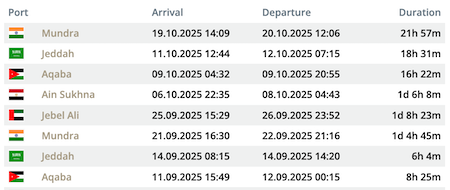
Die letzten Häfen
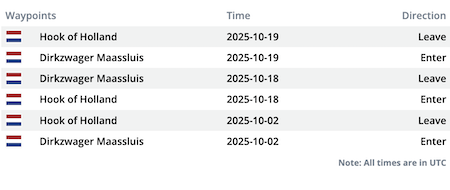
Die letzten Wegpunkte
Die neuesten Nachrichten
Fragments of Gondwana found off Perth
A scientific discovery was made about 1,600 kilometres west of Perth by scientists on board the "Southern Surveyor". Scientiest of the University of Tasmania took part in the three week Indian Ocean voyage. The scientists studied plateaus more than a kilometre down. They were thought to be undersea volcanoes. The scientists used a sea mapping device which scans the sea and creates a 3D picture of the seabed. The scientist noticed that the plateaus were very smooth and didn't look like volcanoes at all. So they dropped the dredge down and found out that the rocks that came up were indeed not volcanic rocks but continental rocks, like granites and metamorphic rocks and ices meaning it once was chunk of land that is now well out to sea. They planned to extract little minerals like zirkon from the rocks to determine the age of the granites and ices in a laboratory. These land masses were stranded out to sea when the supercontinent Gondwana broke up during the Cretaceous time. About 130 million years ago Australia and India and Antarctica were connected, and Australia and India started to break up first, and these little bits of land obviously got stranded out to sea during that process. The scienties brought up some sandstone with some fossils in the sandstone which were bivalves. It could have been a shallow marine or a fluvial environment, but they don't really have any evidence at the moment that they were ever a sub-aerial. So they were looking at those fossils to give us an idea of what sort of environment these land masses were formed in. The research vessel berthed at Fremantle on Nov 10, 2011.
News schreiben