

MSC MICHIGAN VII


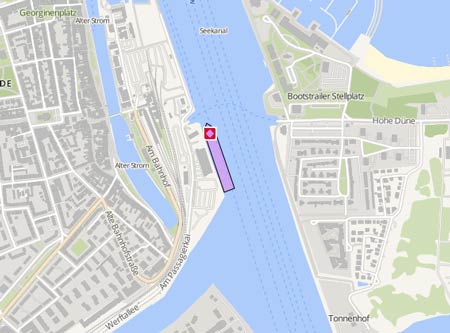
Kurs/Position
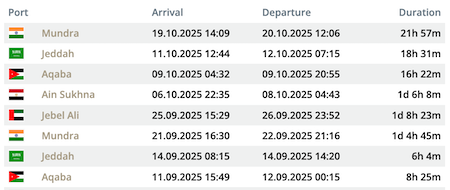
Die letzten Häfen
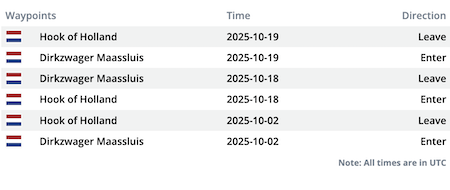
Die letzten Wegpunkte
Die neuesten Nachrichten
Chief engineer of runaway container ship received sentencing
Fernando San Diego San Juan, the former chief engineer of the 'MSC Michigan VII' received his sentence on the afternoon of Aug 10, shortly after the company’s hearing in federal court. He received a $2,000 fine and repatriation back to the Philippines. He previously had pleaded guilty to failing to report a hazardous condition and obstructing an investigation. The 'MSC Michigan VII' had left Charleston on June 5, 2024, when a linkage rod disconnected from the ship’s governor, and engineers could not slow the ship down. Then the vessel was declared a runaway. Charleston Harbor pilots eventually got the ship under control, but not before the authorities had cleared nearby beaches due to concerns about the ship’s wake and evacuated the Ravenel Bridge at a moment’s notice. Court documents stated that San Juan initially had lied to the National Transportation Safety Board and the U.S. Coast Guard when interviewed about the incident. After receiving legal counsel, he admitted to being untruthful. San Juan accepted full responsibility in the courtroom. The U.S. Attorney’s Office said this case should serve as a reminder to all shipping companies that safety needs to remain their top priority, while thanking first responders. The MSC Shipmanagement Ltd. was sentenced to a $6 million fine and four years of probation.
MSC settled out of Court over incident in Charleston
A filing with the U.S. District Court in South Carolina has confirmed a settlement has been reached in a suit pending related to the incident on June 5, 2024, in which the 'MSC M;ichigan III' lost control and sped out of Charleston harbour. The North Charleston company Carver Maritime, which operates a bulk and breakbulk cargo terminal along the Cooper River, had filed a lawsuit alleging the negligence of the ship caused significant damage to the company’s facility. According to the court filing in 2024, they cited the uncontrolled departure of the vessel as causing significant damage to the pier and property. They alleged the vessel sped past the terminal at a speed of over 15 knots, far exceeding a safe speed for that section of the river. In addition to the wash as the ship sped along the river, Carver reported water levels had dropped significantly at its pier. Another vessel, the bulk carrier 'Norwegian Peak', was sucked away from the pier where it was undergoing cargo operations, until its mooring lines became extremely taut, and then forced back into the pier, causing significant damage. The company asked the court to arrest the 'MSC Michigan III', which it agreed with, appointing a custodian. The ship was permitted to leave after about 45 days, and then only with a USCG escort and tugs. According to an earlier court filing, MSC’s lawyers were contending negligence, asserting that the lines of the 'Norwegian Pearl' were not properly maintained. They said that images showed the lines were slack, due apparently due to her crew’s inattention, creating a dangerous situation when their ship or others were maneuvering in the river. The 'MSC Michigan III’s chief engineer entered into a plea agreement with the U.S. attorney’s office in September 2025. As part of the stipulation in the case, it described multiple maintenance problems on the vessel. Among the issues that were cited was a report that the crew was manually adjusting the length of the linkage rod between the governor and the fuel rack to achieve the desired RPMs with the main engine. They asserted the defendant knew that the manual adjustments were hazardous because they could cause the linkage rod to fail. As the ship was departing Charleston, the engineers discovered that the linkage rod had disconnected from the governor. They attempted several times to reconnect the linkage rod. While a fitter was working to repair the rod, the ship became a runaway, unable to slow the main engine, and it sailed at more than twice the regulated speed through the harbour. Officials closed the main roadway bridge crossing the port, and the ship was finally able to regain control as it reached the outer harbour. It was alleged that the incident caused more than $500,000 of damage along the shoreline. In addition to Carver’s facility, there were pictures of private boats being rocked along the river and a wash on the shoreline. Luckily, the crew was able to steer the containership so that it did not strike anything until control was regained.
Chief engineer entered plea agreement in runaway incident
The chief engineer who was working on the 'MSC Michigan VII' in June 2024, when the vessel had a runaway incident as it was departing Charleston, South Carolina, entered into a plea agreement with the U.S. attorney’s office. In filing the agreement in the U.S. District Court in South Carolina, the U.S. Attorney’s office revealed a litany of problems aboard the vessel, which the crew was dealing with before the governor controlling the main engine failed on June 5, 2024, causing the vessel to reach speeds of up to 16 to 17 knots, more than twice the legal limit, in Charleston. Fernando San Diego San Juan, aged 61, and a Filipino national, had joined the vessel as chief engineer in April 2024. Under the terms of the agreement, he agreed to plead guilty to one count that he failed to report a hazardous condition to the U.S. Coast Guard when the ship arrived in South Carolina, and a second charge that he obstructed the investigation after the incident by giving false information to the USCG and National Transportation Safety Board investigators as well as instructing another engineer not to tell the investigators about the actions taken aboard the vessel that caused the incident. Further, they report the pilot had not been advised of any mechanical issues with the vessel. According to a detailed Stipulation of Facts in Support of Guilty Plea filed with the court, San Juan was only given a five-hour handover briefing when he joined the vessel, which they call “insufficient” for him to have obtained a complete picture of the status of the engine room and all the vessel’s critical machinery. They stated that he discovered that there were numerous problems with equipment in the engine room. They cite oil and air leaking from the crankcase safety valve of the Main Air Compressor for the main engine, and the day before the incident, he also observed the second main air compressor was not functioning properly. It could only achieve approximately 60 percent of its rated capacity. San Juan wrote up the issues, and they were reported to the master of the vessel, who notified the shoreside office of the management company. Other problems included a reduced capacity on the generators, meaning that many times the bow thruster could not be used while maneuvering. The vessel’s freshwater cooling system is also reported to have had a leak, and the cooling water for the lube oil system had developed a leak. As early as April 24, San Juan was aware that the RPMs ordered by the bridge telegraph were not always being achieved by the main engine. The only way to achieve them was to manually adjust the length of the linkage rod between the governor and the fuel rack. They report this was in part due to the poor condition of the main engine fuel injector systems and leakages in the barrels and plungers when using lower viscosity, low-sulfur fuel. The main engine required more fuel to achieve the ordered RPMs when using the lower viscosity fuel. They assert the defendant knew the manual adjustments were hazardous because they could cause the linkage rod to fail. The'MSC Michigan VII' was departing Charleston at midday on June 5. After completing a turn and starting its departure, the third engineer realized the main engine was not achieving the ordered RPM. He left the control room to adjust the governor, and soon thereafter, the linkage rod disconnected from the governor. The defendant tried several times unsuccessfully to reconnect the linkage rod. While a fitter was working to repair the rod, the ship became a runaway, unable to slow the main engine. The authorities ordered a main roadway bridge crossing the port, the Arthur Ravenel Jr. Bridge, to be closed and evacuated local beaches. As the ship sped out of the harbour, it was charged that it caused more than $500,000 in damages along the shoreline. The crew was able to stop the engine by the time the ship exited the harbor. It anchored and was brought back into the port, where it was detained for 44 days by the USCG. The following day, they wrote in the statement of fact that the defendant told investigators that the crew never adjusted the linkage rod and that only a qualified technician would adjust the linkage rod. Further, the court papers stated that the defendant approached the vessel’s fourth engineer, telling him to repeat the statements that they had not adjusted the rod. The plea agreement highlighted that the first charge of failing to report the hazardous condition on the vessel has a maximum sentence of six years imprisonment and/or a fine of $250,000, as well as a term of up to three years supervised release. The charge of obstructing the proceeding also has a maximum sentence of five years imprisonment and/or a fine of $250,000, as well as up to three years supervised release. No date was announced for the sentencing.
News schreiben