

MSV HAJI ALIverschrottet


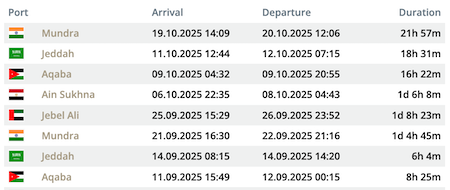
Die letzten Häfen
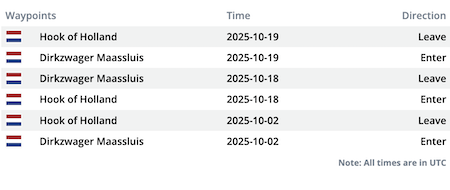
Die letzten Wegpunkte
Die neuesten Nachrichten
Death of 4000 animals reignited debate over safety and ethics
The precise cause of the explosion aboard the 'Haji Ali' off Limah on May 13 remained unclear. While there were speculations about a possible aerial strike, no government or maritime security authority has confirmed such claims. The Gulf livestock trade suffered a heavy blow with the loss of the traditional Indian sailing cargo ship, which was linked to Salaya in Gujarat, and transporting approximately 4,000 sheep and goats from Berbera to Sharjah on its last voyage. Despite the rapid spread of flames, the 14 Indian crew members were rescued by the Oman Coast Guard and taken safely to Dibba port. No serious injuries were reported, and their documents were preserved.The Indian Sailing Vessels Association has called on the Indian government to assist in repatriating the crew and to investigate the circumstances surrounding the loss. However, the livestock trapped below deck perished, either from fire, smoke inhalation, or drowning as the vessel capsized and sank. The sinking has reignited debate over the safety and ethics of live animal transport by sea, a trade that moves millions of animals annually across long distances and in particular, to the Middle East. Animal welfare organisations have condemned the conditions under which livestock are shipped, highlighting overcrowding, heat stress, and the inability of animals to escape in such emergencies. The sinking of the 'Haji Ali' underscored these concerns, with groups such as Four Paws describing the incident as “one of the most horrific ways imaginable” for the animals’ lives to end. The Gulf–East Africa livestock corridor is a long‑standing trade route, with Berbera serving as a major export hub for Somali livestock bound for Middle Eastern markets. The loss of the 'Haji Ali' was expected to disrupt flows temporarily, while also drawing attention to the vulnerability of traditional sailing vessels operating in this trade and the urgent need for stricter safety standards and oversight in live animal transport. For centuries, dhows have linked India’s west coast with East Africa and the Arabian Gulf. Built mainly in Salaya, Mandvi, and Porbandar in Gujarat, these ships, now often fitted with auxiliary engines and registered as Motor Sailing Vessels (MSVs) — continued to carry cargo ranging from livestock to general goods. Despite their age‑old design, dhows remain vital to regional trade, operating on routes that pre‑date modern container shipping and reflecting a living maritime heritage across the Arabian Sea.
Livestock carrier capsized after attack
The MSV 'Haji Ali' sank off the coast of Oman on May 13, 2026, at around 3.30 a.m. LT. after an attack near Limah, off the coast of Oman. The ship was transporting approximately 4,000 sheep and goats from Berbera in Somali land enroute to Sharjah, when it was struck by an “unidentified explosive object.” Reports were speculating it was likely a drone or possibly a missile. The attack triggered a fire on board, which led to the capsizing. The 14 crew members, all Indian nationals, abandoned ship onto a rescue boat and were rescued by the Oman Coast Guard and taken to Dibba Port with no injuries reported. The crew’s documents, including passports, seaman’s books, and other papers, were not lost. The Indian Ministry of Foreign Affairs and the Ministry of Shipping rcondemned the attack on civilian seafarers.
News schreiben