

STUYVESANT


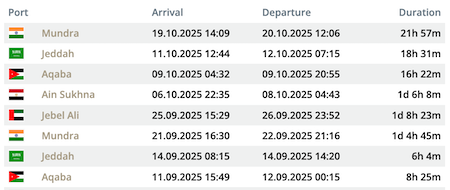
Die letzten Häfen
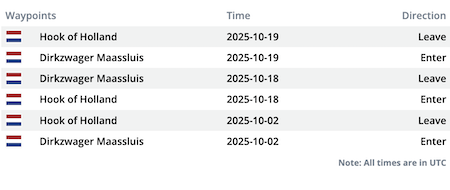
Die letzten Wegpunkte
Die neuesten Nachrichten
NTSB report into fatal fire published
The engine room fire aboard the 'Stuyvesant' on Nov 2, 2024, has revealed critical lessons about maintenance procedures and machinery startup protocols, according to a newly released National Transportation Safety Board investigation report. The fire in the St. Johns River near Jacksonville, Florida, claimed one life and caused an estimated $18 million in damage to the hopper dredger. The victim, a crewmember who was in the machinery control room when the fire erupted, was removed by the shipboard emergency squad but later pronounced dead at a local hospital. The investigators determined that the fire resulted from a catastrophic chain of events triggered by what should have been routine maintenance. The probable cause was lube oil spraying from ageneratorand igniting off a nearby running diesel engine, due to engine crew members not reinstalling a plug after routine maintenance in accordance with the engine manufacturer’s instructions and not thoroughly inspecting the port auxiliary engine before initially starting it. The crew had just completed maintenance on one of the vessel’s two 2,442-hp Caterpillar 3512C auxiliary diesel engines, which included replacing fuel and lube oil filters and changing the lube oil in the sump. However, the investigators discovered that the plug on the engine’s lube oil filter housing had not been reinstalled. It was later found sitting on a nearby storage cabinet. When the 1st engineer started the engine remotely from the machinery control room, pressurized lube oil at approximately 65 psi sprayed from the open port in the filter housing onto the hot exhaust surfaces of an operating main engine below, which were between 614°F and 742°F. Flames appeared less than a minute after startup. A critical factor in the casualty was the decision to start the engine remotely rather than locally. If the engine had been started locally, a crew member would have been near the engine for the start sequence and could have identified a reduced discharge of lube oil through the open internally threaded port at the top of the lube oil filter housing and could have taken action to stop the start sequence. The investigation revealed that multiple maintenance procedures were not followed according to manufacturer instructions. Beyond the missing plug, the lube oil filler cap was also left open.More significantly, crew members failed to conduct the walk-around inspection recommended by the engine manufacturer before starting the engine. Disruptions during the maintenance process may have contributed to the oversights. The engineering crew had initially planned to perform the work the day before but delayed due to limited time. On the day of the fire, the three-person maintenance team’s composition changed when one member left due to illness. The crew’s emergency response likely prevented an even worse outcome. The port auxiliary engine was stopped about 2.5 minutes after the fire was discovered, cutting off the primary fuel source. The chief engineer shut down the main engines at 2.39 p.m., reducing heat output, and when those engines stopped, the shaft generators ceased producing power, shutting down all ventilation fans and reducing oxygen to the engine room. When the shipboard emergency squad reached the engine room around 2.57 p.m., they observed no active flames. After verifying the space was sealed, the crew released the vessel’s fixed CO2 fire extinguishing system. In response to the casualty, vessel operator The Dutra Group has implemented significant procedural changes. The company now mandates that engines must be started locally following any maintenance work, and requires two crewmembers to inspect equipment before starting engines after maintenance. Full report: https://www.ntsb.gov/investigations/Pages/DCA25FM004.aspx
One person critically injured in engine room fire
The U.S. Coast Guard Station Mayport responded to a fire that occurred in the engine room of the 'Stuyvesant', which was located near the entrance of the St. John’s River, on Nov 2, 2024. Small boat crews responded to the scene assisting the efforts alongside the Jacksonville Fire Rescue Department & Jacksonville Sheriff’s Office. One crew member was transported by the Mayport’s crew to receive emergency medical help ashore. The Coast Guard was conducting an investigation into the cause of the fire, which had started around 3 p.m. The last reported position was 30° 24' N 081° 24' W with restricted movement status off Jacksonville.
USA: Dutra Group Acquires Hopper Dredger Stuyvesant
The Dutra Group has announced that it has added a hopper dredge, the Stuyvesant, to its fleet of dredges, marking an historic day in the company’s history. At 372 feet in length and 72 feet wide, the Stuyvesant is the second largest hopper dredge in the United States. Read more: http://www.dredgingtoday.com/2012/01/04/usa-dutra-group-acquires-hopper-dredger-stuyvesant/
News schreiben