

TIO JAN


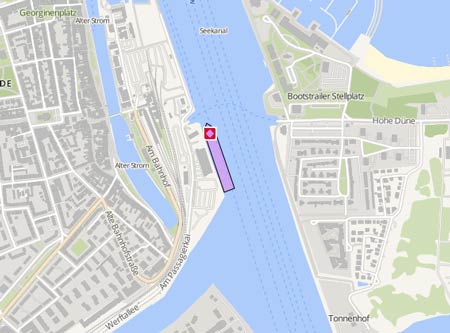
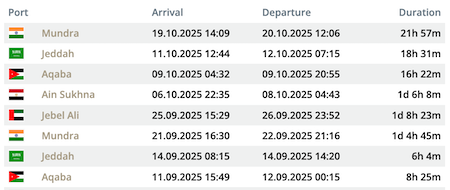
Die letzten Häfen
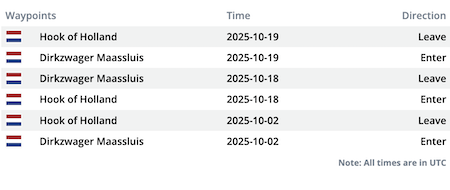
Die letzten Wegpunkte
Die neuesten Nachrichten
Allision sparks safety debate again
After the allision of the 'Tío Jan' on Oct 3, which damaged one of the bridge's protective pilings, which connects the Chaco and Corrientes provinces, Paraguayan shipowners' associations requested an expansion of convoy limits, Argentina was rejecting the proposal and reinforcing safety requirements. The barge convoy had lost control near the General Belgrano Interprovincial Bridge and crashed into piling number 5 of the bridge's protective structures, causing damage. After a similar accident in the past, the Argentine Highway Authority and the General Ports Administration spearheaded the financing and repairs of the infrastructure, a project completed in 2023. The latest barge convoy allision on the Paraná-Paraguay Waterway has once again prompted calls for stricter safety measures, while the responsibility for the necessary repairs is being determined. As a preventative measure, the Argentine Naval Prefecture has reduced the maximum dimensions of convoys crossing the bridge to 180 meters in length and 50 meters in beam, both upstream and downstream, and at both day and night. This decision has once again brought under scrutiny the lobbying efforts of Paraguayan shipowners with Argentine and Uruguayan authorities regarding the size of convoys permitted to operate on the Argentine Waterway. The debate on safety is particularly sensitive given the strategic importance of the Waterway for Argentina. More than 70% of Argentine foreign trade moves along the Paraná and Río de la Plata rivers, and any incident would result in losses of millions of dollars. Based on Regulation 7, formally called the “Single Regime of Maximum Dimensions for Waterway Convoys,” the Intergovernmental Waterway Committee (CIH), comprised of Brasil, Paraguay, Bolivia, Argentina, and Uruguay, established the size limits for convoys traveling on the waterway. In this context, the Argentine Naval Prefecture plays a key role, approving or rejecting the various proposed changes. In 2013, Argentina proposed—and it was approved—a length limit of 236 meters and a beam limit of 50 meters for convoys. In 2016, this limit was increased to 290 meters in length and 50 meters in beam. However, certain sections—such as those near the General Belgrano Bridge—maintained special restrictions for safety reasons. Each restriction means that the convoy must moor some of its barges, pass part of it, and then return to collect the rest of its cargo to reassemble the convoy further downstream. This adds navigation time and mooring costs. Throughout 2025, the Paraguayan River and Maritime Shipowners' Center (Cafym) engaged in intense lobbying to once again raise the maximum train size limit. The attempt to increase it to 330 meters in length and 65 meters in beam was quickly rejected, and efforts were made to force an increase to 65 meters in beam, while maintaining the 290-meter length. The discussion went beyond the technical sphere. Paraguay, with the second largest river fleet in the world, is a key player in transshipment cargo, which represents a considerable percentage of the cargo for which Argentina and Uruguay compete. In recent years, this cargo has been transshipped in the Buenos Aires area, given the increased cost of Montevideo and the delays in its operations. Leaders of the Paraguayan Chamber of Shipping (Cafym) indicated that Uruguay's support for their claim could tip the balance of their cargo back toward the Uruguayan capital and the new port of Nueva Palmira, dedicated exclusively to transshipment. A larger convoy means lower logistics costs for Paraguayan shipping companies, although it considerably increases the risk of accidents on the Paraná-Paraguay Waterway. Based on a 2016 study, CAFYM proposed modifying the maximum permitted dimensions again, but Argentina rejected the study, conducted by a private chamber of commerce, and demanded a study backed by an international technical body. Throughout 2026, the center organised several meetings in Uruguay and Brazil to reiterate its demand. The CAFYM, among its requests to change the regulations on the Argentine Waterway, also questioned the toll payments made by barges and demanded fewer customs controls on cargo arriving from Paraguay. After losing 40% of its container operations due to the lack of transshipment from Paraguay, Uruguay announced its support for the demand to modify the size of the convoys. The accident on the bridge connecting Chaco and Corrientes was a new development due to the potential damage it could cause, but incidents where barges lose control of their convoys were frequent. In May, a tug lost control of its convoy near Chaco, leaving 20 barges with containers adrift. Based on a 2016 study, CAFYM proposed modifying the maximum permitted dimensions again, but Argentina rejected the study by a private chamber and demanded a study backed by an international technical body. That same month, another convoy collided with a cargo ship moored in the Rosario area. In January, a similar incident occurred near Ituzaingó, Corrientes, where swimmers had to flee from drifting barges. Despite the recurring safety risks—which underscore the difficulties of navigating the Paraná River—CAFYM continued to lobby for more flexible safety regulations, allowing for the use of increasingly larger convoys on the waterway. Report with photos: https://dinamicarg.com/convoy-barcazas-choco-puente-general-belgrano-reavivo-debate-seguridad-navegacion-hidrovia/
Allision with General Manuel Belgrano Bridge
Early on Oct 3, 2026, the 'Tio Jan' allided with the protective structure of pier No. 5 of the General Manuel Belgrano Bridge, which connects the Chaco and Corrientes provinces, while navigating downstream on the Paraná River and passing the area of the interprovincial bridge, at kilometer 1,205 of the navigation route. Damage was reported to the bridge's guardrail and pier number 5. Additionally, five barges became detached from the convoy, prompting an operation to recover them. Two were initially recovered and moved to a designated mooring area at kilometer 1,198. A third was later recovered with the assistance of the tug 'Pampero I'. The two remaining barges were stranded at kilometer 1,199, outside the main channel. At 8:44 a.m., the tug managed to free the barge 'GL-004' from the grounding site. It was then towed to the mooring and secured at 10:25 a.m. The tug then returned to the site to continue work on the second barge. Finally, at 11:55 a.m., it was reported that barge 'PG-17' had also been freed and subsequently moored in the designated area. After all five barges were recovered and safely moored, the emergency operation was concluded. At daylight, Coast Guard personnel conducted another inspection of the impact zone and assessed the condition of the fender and pier No. 5 of the General Belgrano Bridge. During the procedure, a displacement of the fender from its original position was observed, in addition to the damage to the piling structure. A drone was also used to obtain aerial images that allowed for documenting the state of the structure after the impact. As a preventive measure, the local Coastal Station reduced the maximum dimensions of convoys crossing the bridge to 180 meters in length by 50 meters in beam, both upstream and downstream, and during both day and night. The Federal Prosecutor's Office of Corrientes, headed by Prosecutor Melina Perborell, intervened after the incident. Assistant Prosecutor María Ana Zalazar was initially informed of what happened, and subsequently, legal proceedings were ordered to be initiated, with the Prosecutor's Office to be kept informed of any developments. To date, no restrictive measures have been imposed on the captain or the tug. Both an administrative and a judicial investigation were launched to examine the collision with the bridge structure and the subsequent release of the barges. The Coast Guard also requested a technical inspection of the vessels involved to verify their safety conditions and plans to conduct onboard inspections with specialized personnel. Meanwhile, the transit of other convoys across the bridge continued under the control of Coastal Station L6Y. Other vessels crossed the area without incident. Report with photos: https://www.ellitoral.com.ar/sociedad/2026-10-4-10-33-0-el-puente-interprovincial-resulto-con-danos-tras-el-impacto-de-un-remolcador-paraguayo
News schreiben