

TRANSFORMER


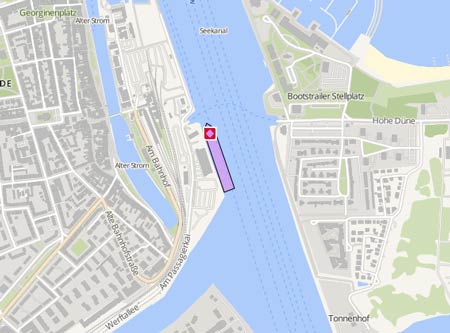
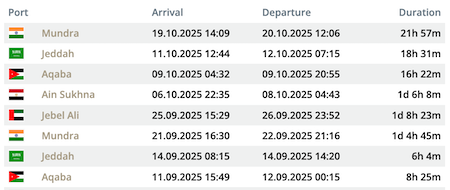
Die letzten Häfen
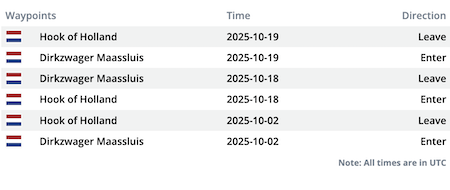
Die letzten Wegpunkte
Die neuesten Nachrichten
Shadow tankers switched to Russian flag and escorted by Navy in convoys
Russia has started attempting to make it more difficult to access its tankers by employing military protection and a convoy system. To provide security, Russia has deployed the frigates 'Admiral Grigorovich' and 'Neustrashimiy' for this purpose. The 'Neustrashimiy' had only departed the naval base of Baltiysk (Kaliningrad) on July 2, 2026, before joining the 'Admiral Grigorovich'. On July 6, three Russian crude oil tankers, namely the 'Provider', 'Nasledie' and 'Transformer', gathered in the North Sea, northwest of the island of Sylt, carrying a combined total of nearly 300,000 tons of oil from the Baltic Sea. Their reported destination was Asia. All three tankers had their flags changed to Russia from Malawi or the Comoros just a few weeks ago. The 'Transformer' was previously known as the 'Grinch', which was seized by France in January and released only after a seven-figure fine was paid. The 22-year-old tanker had previously been transporting Russian crude oil under the Comoros flag. It now displayed the Russian flag and listed Sochi as its home port on its stern. In taking these measures, France cited Article 110 of the UN Convention on the Law of the Sea, which authorises naval boarding operations when there were indications that a vessel is flying a false flag. Great Britain has justified its actions on similar reasons. Switching to the Russian flag was intended to enhance protection by the Russian Navy and make it more difficult for EU states to intervene. This move was also clearly demonstrating that actions taken against the 'shadow fleet' were having an effect. These measures were driving up costs for Russia while reducing revenue from oil sales. Operating under the Russian flag also entails greater logistical demands regarding servicing and maintenance. Furthermore, Russian-flagged vessels are legitimate targets for Ukrainian attacks, as has been demonstrated in the Black Sea and the Mediterranean. Consequently, the Russian Navy must further step up its efforts to protect these tankers. Report with photos: https://www.kn-online.de/schleswig-holstein/russland-setzt-auf-neue-flagge-und-marine-zum-schutz-der-schattenflotte-W3BCPB2G4VCNXGBRIYUXXR66NU.html?utm_term=Autofeed&utm
Shadow tanker released after owner paid a fine of several million Euros
The 'Grinch', suspected of links to the Russian shadow fleet, has been allowed to leave French waters after three weeks immobilised off the Marseille‑Fos oil terminal, authorities confirmed on Feb 17. Theaframax, falsely flagged to Comoros, had loaded crude at Russia’s Arctic port of Murmansk, and was boarded by French forces on Jan 22 in the Mediterranean. The owner was, according to prosecutors and the Bouches‑du‑Rhône and Mediterranean maritime prefectures. under a plea procedure and handed a pecuniary penalty by the Marseille judicial court. The owner paid several million Euros into the account of AGRASC, the agency that manages seized and confiscated assets, after failing to justify the vessel’s nationality. The owner has committed to obtaining a new, verifiable flag as soon as possible.
Captain released, tanker further investigated
The Indian captain of the 'Grinch' was cleared to return to work after being questioned by Nicolas Bessone, the Marseille prosecutor, He does not face formal charges at this time and has been allowed to return to his regular duties on board,.while the tanker remained under administrative detention following its interception in the Alboran Sea. on suspicion of using falsified documents and being linked to Russia's ghost fleet, designed to evade international restrictions. The investigation into the 'Grinch' was being handled by the Maritime Gendarmerie and overseen by the local public prosecutor's office. The main reason for suspicion lies in the apparent discrepancy between the tanker's flag, which is Comoros, and the evidence pointing to its true Russian origin. Several large ships are using similar practices to conceal links with Russia and thus evade international sanctions imposed as a result of the conflict in Ukraine. The 'Grinch' was on an international watch lists aimed at tracking Russian maritime activity outside the scope of international sanctions. The UK government identified the vessel as the ‘Grinch’ in its catalog of ships belonging to Russia’s so-called ‘ghost fleet’. Meanwhile, the European Union and the United States listed the ship as the ‘Carl’. According to the Marseille Public Prosecutor’s Office, the potential duplication of names and registrations was part of the strategies used to hinder tracking and oversight by European authorities. The operation fell within European efforts to curb practices that circumvent international sanctions, implemented since 2022 in response to the invasion of Ukraine. Investigative bodies believed that the manipulation of documents, including flag registrations and formal ship identifications, is a widespread tactic in Russian maritime operations to maintain the flow of hydrocarbons to alternative markets without the expected monitoring or restrictions. The investigation remains open under the supervision of the Marseille Public Prosecutor's Office, which is in constant contact with international authorities to verify the documents seized after the vessel's interception. French officials were seeking to determine the ship's exact routes, its ownership history, and the veracity of the documentation presented during its voyage, according to Le Figaro.
News schreiben