

VIKTOR BAKAEV


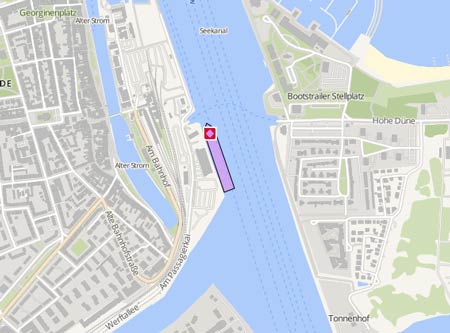
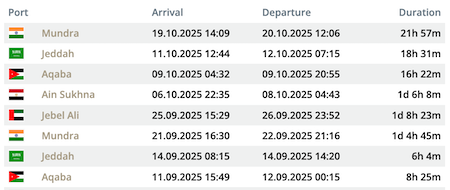
Die letzten Häfen
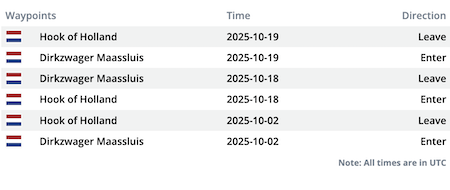
Die letzten Wegpunkte
Die neuesten Nachrichten
Convoy of sanctioned Russian tankers on one of the most northerly commercial shipping routes ever attempted in the Arctic
Russia has dispatched an unprecedented convoy of sanctioned oil tankers to within 500 nautical miles of the North Pole, sending the fleet onto one of the most northerly commercial shipping routes ever attempted in the Arctic, including the 'Dinasty', 'Viktor Bakaev', 'Vostochny Prospect', 'Liteyny Prospect', 'Jagger' and 'Ligovsky Prospect'. The fleet had assembled in the Kara Sea over the past several weeks. Satellite images caught part of the fleet heading northwards on Aug 5, 2026. The fleet was transporting crude oil from Arctic export terminals toward Asian buyers as Russia continued to make growing use of the Northern Sea Route during the summer navigation season to shorten voyages and reduce reliance on contested global shipping hotspots such as the Black Sea. Russia has steadily expanded eastbound Arctic crude exports in recent years as it redirects energy shipments towards Asia following sanctions imposed after the invasion of Ukraine. At the fleet’s current position, only four vessels were operating farther north, the Swedish icebreaker 'Oden', China’s polar icebreaker 'Xue Long', Norway’s research icebreaker 'Kronprins Haakon', and the ice-class expedition vessel 'Virgo'. The routing places Russia’s Arctic oil fleet among the northernmost commercial vessels ever recorded. The route passes north of 81 degrees north, roughly 10 degrees farther north than Utqiagvik, Alaska, which sits at about 71 degrees north latitude. The unusually northerly routing reflected the uneven sea ice conditions. While ice concentrations north of Severnaya Zemlya and across much of the Laptev Sea have already opened up, more difficult ice has persisted in the Vilkitsky Strait, prompting authorities to direct commercial traffic around the northern side of the archipelago instead. Farther east, however, the voyage remained challenging. Significant sea ice continued to cover parts of the East Siberian Sea. Three Russian nuclear icebreakers were currently deployed to escort commercial shipping along the Northern Sea Route. The difficulties became apparent, when the tanker 'Aria' reversed course in the East Siberian Sea on July 31, possibly prompted by heavy ice conditions ahead.
Russian shadow tanker on sanctions list
The UK government imposed sanctions on 30 vessels, among them the 'Viktor Bakaev', that are a part of the Russian Shadow Fleet for performing illicit oil transport operations on Nov 25. In addition, two Russian insurance companies have also been targeted for their role as facilitators. The aim of the sanctions is to hinder Russia from continuing its offensive in Ukraine by hamstringing Russian oil revenues. The tankers have transported more than $4.3 billion of oil and its derivatives in the last year alone. With this sanctions package, the total number of vessels in the Russian shadow fleet sanctioned by the UK has risen to 73, the highest of any nation in the world. Along with the sanctions, the UK government also exhorted other countries to follow its call to action and act against the shadow fleet. So far, 46 countries have joined this initiative. The vessels that operate in the shadow fleet engage in deceptive practices and are poorly maintained, leading to a hazard on the open seas and increasing the danger for all other vessels. Therefore, cracking down on the vessels and the companies that insure them would also clear shipping lanes of unsafe traffic. The Russian insurance companies Alfastrakhovanie PLC and VSK have been sanctioned. This will prohibit any cooperation with these insurers and effectively cut them off from the international markets. The tankers that have been placed in sanctions will be banned from entering UK ports. The UK authorities have reserved the right to direct the movements of these vessels and detain them if needed. These vessels will not be registered on the UK Ship Register, and existing registrations of these vessels will be terminated. In addition to this, these vessels will not be able to benefit from price cap exemptions even if they were involved in transactions that qualify for the Oil Price Cap Exception.
News schreiben