

ATLANTIS


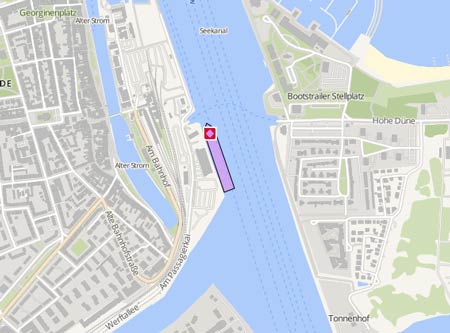
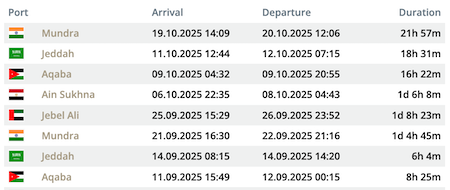
Latest ports
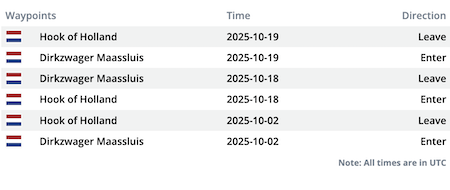
Latest Waypoints
Latest news
First-ever images of the wreck of the Shackleton-ship ‘Quest’
A team of researchers aboard the 'Atlantis', which had sailed from Saint George on June 25, 2026, has started surveying the shipwrecks of the explorers Sir Ernest Shackleton and Captain Robert Falcon Scott, the 'Quest' and 'Terra Nova'. The aim was to capture and document images of the wrecks and enable the creation of 3D replicas of the ships. The 'Quest', a 125-tonne motor-sailing steamship, was rediscovered in 2024 lying at a depth of 390 meters off the coast of Newfoundland and Labrador. The schooner-rigged vessel served as Shackleton's last expedition ship on the Shackleton-Rowett expedition of 1921/22. The explorer died on board on January 5, 1922, after suffering a heart attack while the vessel was at anchor at Grytviken, South Georgia. He was aged 47. The 'Terra Nova', for its part, was discovered in 2012 lying at a depth of 300 meters on the seabed off the southwestern coast of Greenland. The vessel carried Capt. Scott and his men on their doomed expedition to reach the South Pole in 1912. Though the ship continued in service after the polar expedition, she sank in 1943 while carrying supplies to U.S. bases during World War II after she was damaged by ice. Following months of planning, the Royal Canadian Geographical Society (RCGS), in partnership with the Woods Hole Oceanographic Institution (WHOI), was now filming the two wrecks. The highlight of the mission so far was a dive by WHOI's human-occupied submersible 'Alvin' to the wreck of 'Quest', the first time that people visited the wreck and saw it with their own eyes. It will also be only the second time that a submersible has reached the 'Terra Nova'. The mission was the first for the 'Alvin' after the submersible was granted U.S. Navy certification to return to service after undergoing a routine overhaul and testing program. In service since 1964 and having completed more than 5,300 dives, the historic three-person deep-sea research submersible could now resume diving to depths of 6,500 meters. Using a combination of high-definition video cameras and photogrammetric technology, the scientists will map the shipwrecks and debris fields around their hulls. The expedition will be groundbreaking because neither ship has been previously surveyed with this technology. The expedition has, for the first time, managed to take close-up photographs of the wreck of the 'Quest' during a night-time dive. These revealed that the ship is in a poor condition. Not only was it heavily overgrown, but numerous fishing nets have also become entangled in the wreck. In addition to the remotely operated submersible, a manned deep-sea submarine was also deployed. John Geiger, Director of the Royal Canadian Geographical Society, took part in the first dive in person. Report with photo and video: https://www.iflscience.com/over-100-years-after-his-death-the-wreck-of-shackletons-final-ship-is-photographed-for-the-first-time-in-remarkable-condition-84065 https://www.youtube.com/watch?v=Vp5NMiER9r4
Search for lost submarine interrupted for replenishment
On Dec 17, the "Atlantis" and the ARA "Puerto Argentino" having interrupted the search for the lost ARA "San Juan", entered the Mar del Plata Naval Base to carry out repelnishment and chqange of personnel. The "Atlantis" docked at 8.22 p.m. in the submarine dock to be supplied with fuel within 24 hours. The Argentine Navy continued the search tasks in very adverse meteorological conditions with the oceanographic vessel HMS "Protector" and the destroyer ARA "La Argentina". Both ships were sweeping the bottom of the sea with sonar in the northern range of the path which the submarine would have followed to Mar del Plata. Report with photos: http://www.lacapitalmdp.com/el-buque-atlantis-en-mar-del-plata-galeria-de-fotos/
Atlantis one of eight ships searching for lost submarine
The "Atlantis" was one of eight vessels working without rest to find the sunken submarine ARA "San Juan" on Dec 9. The objects found were not from the ship although they detected a new point further north. On Dec 8 three ships observed objects at two different depths. They analyzed an object at 800 meters depth which did not correspond to the boat. On Dec 9 the "Atlantic" was to visualize two objects detected. The search area was expanded after having detected a new signal that will be investigated. They were looking at an area of 40 kilometers radius where there were six vessels which were assigned to smaller areas, although they have already swept the site almost twice. To the northeast of the area was the "Austral" and to the northwest the "el Angelescu". There was no established date of completion of this search phase. Two traces, one of them located to the north of the search zone, forced to expand the tracking region towards Mar del Plata. One of the new points detected was northeast of the search sector and was found by the Argentine oceanographic vessel "Austral". There was nother object pending of visualization that is going to be investigated by the "Atlantis".
Upload News